Case study reviewed and current as of August 2026.
The Beginning
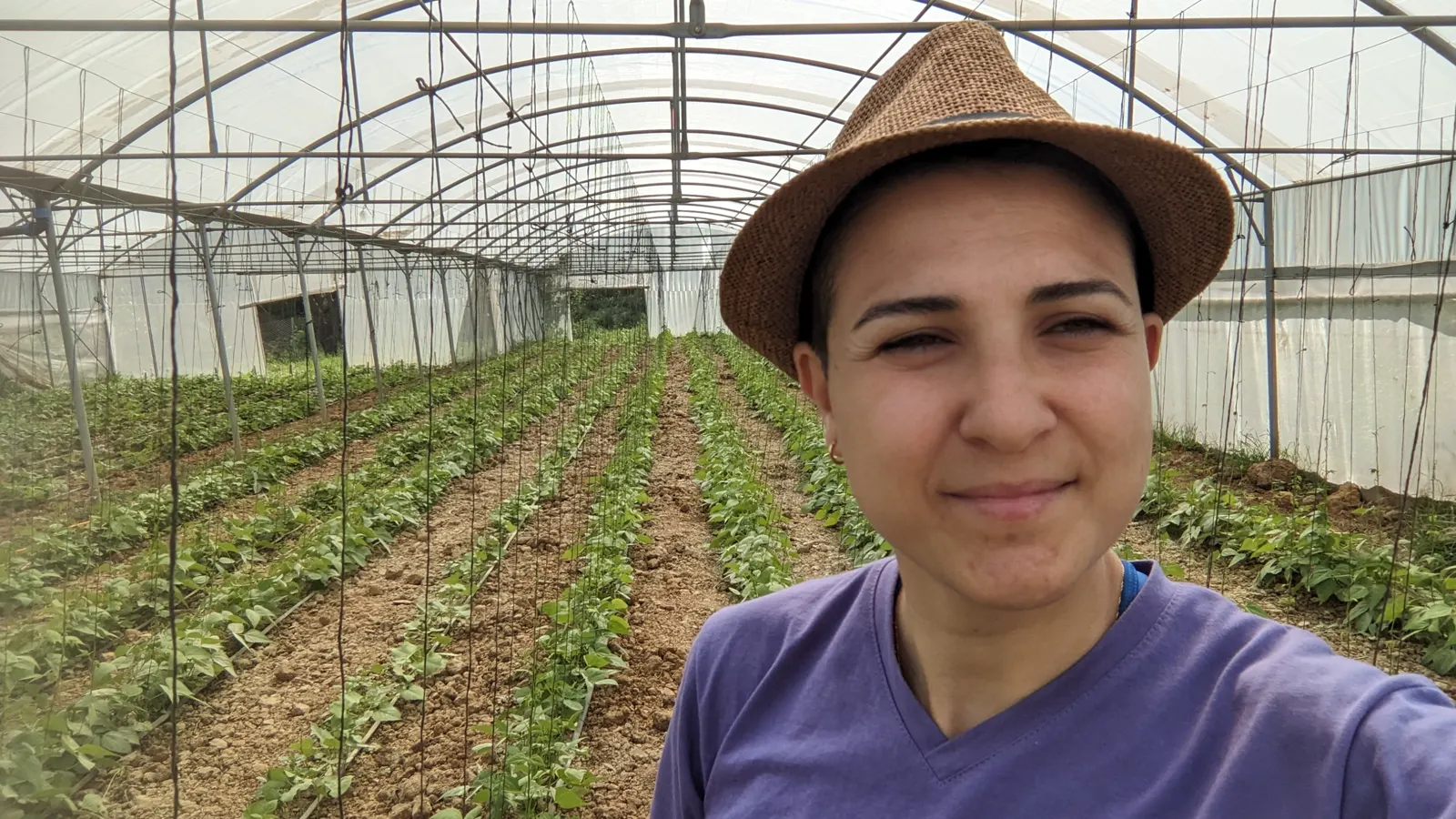
Rima Taha's agricultural initiative in Lebanon's Chouf District was not, at first, a framework. It was a question: could a regenerative cooperative model for agriculture actually work, not in theory, but in the soil, in a community, across seasons?
The ecological cooperative model that emerged from this initiative, years of applied practice in the mountains of Lebanon, answered that question. And in doing so, it created something rarer still: a proof-of-concept that could be taught, replicated, and deployed at scale.
From Prototype to Framework
This prototype, developed through years of applied ecological practice, became the foundation for the Farmer Intelligence Framework: a systemic agricultural transformation model now designed for NGO and ministry-level deployment.
The Farmer Intelligence Framework addresses the full cycle a farm actually experiences: the daily operational record, produce, market intelligence, sales and route to market, and retail. It is built not on theoretical ecology, but on a living proof-of-concept that already worked.
The framework is designed for NGOs, government ministries, and international development organisations, including UN bodies, seeking a replicable, evidence-based model for regenerative agricultural transformation at institutional scale.
The Five Layers
Operations
The daily record: planting, inputs, labour, treatment, irrigation, harvest, and true cost per unit.
Produce
Yield, quality, grading, timing and seasonality, recorded so a buyer can verify and a farmer can prove.
Market Intelligence
Demand, pricing, competing supply, and where the value actually sits along the chain.
Sales & Route to Market
Buyers, contracts, margin and terms, negotiated from evidence rather than from need.
Retail
How produce reaches a shelf, what that shelf earns, and what it says to plant next season.
"The ecological cooperative model that emerged from Lebanon's Chouf District was not designed to become a framework, it became one because it worked."
Rima Taha, Technology & Digital Innovation Advisor