A small farm does not need a national data system. It needs to know what was planted, when it was watered or fed, what it cost and what it produced, written down in a way that takes minutes, not hours. This guide covers what simple farm software should do, how to automate the daily routine without overcomplicating it, and where the needs of institutions begin to differ.
In short
A small farm needs crop, plot, dates, inputs, costs and yield recorded in under a minute on a phone, working with weak connectivity, with export in a common format. An institution needs records from hundreds or thousands of farms to be comparable, which calls for a shared data standard, clear data ownership and a plan for who maintains the system after the pilot.
What simple crop-data software should do
- Record the basics: crop, plot, dates, inputs, costs and yield.
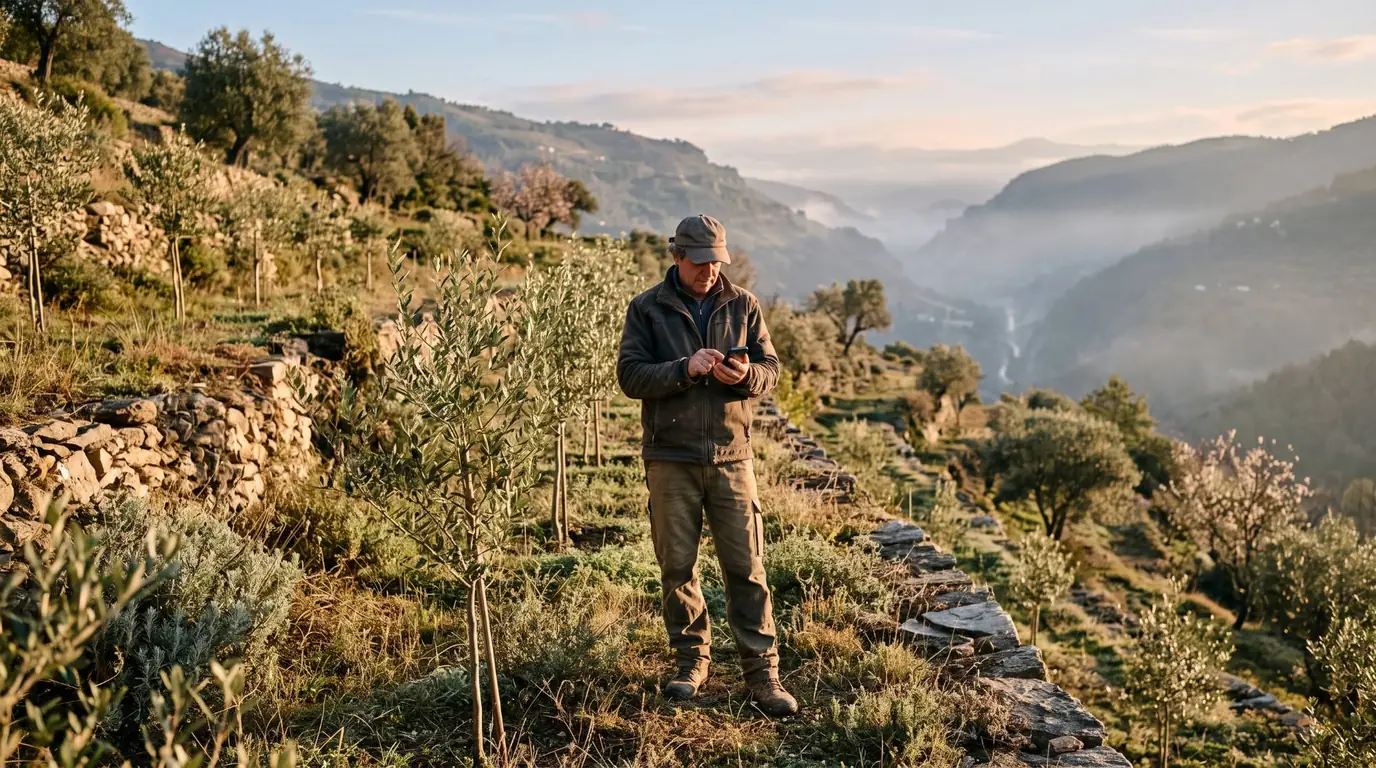
- Work on a phone, including in places with weak connectivity.
- Make entry fast, because a record that takes too long will not be kept.
- Let you export your data in a common format.
- Give you a simple view of the season: what is due, what has been done and what it cost.
Simple agricultural intelligence platforms add a layer on top: patterns across seasons, comparisons between plots and early warnings. Be careful about advanced forecasts built on a few seasons of records. They look impressive and say little until the data has built up.
Automating daily farming workflows
The best automation on a farm is usually modest. Reminders for recurring tasks such as irrigation, feeding and inspections. Sensor readings or weather data logged automatically so you do not have to copy them. A single place where the day's tasks and notes land. Start with the task that is most often forgotten or most tedious, automate that, and see whether it helps before adding more.
Choosing a tool: five questions
- Can I enter a record in under a minute?
- Does it work when the signal is weak?
- Can I export everything if I change tools?
- Is the cost fair for my size, now and as I grow?
- Does it fit how I actually farm, not an idealised version?
Keep the records honest
Whatever tool you choose, the value comes from consistent records. Write down what each field means, for example whether yield is per plot or per season, and keep to it. A modest set of records kept for several seasons is worth far more than a detailed set kept for a few weeks. If you start with a simple tool and later join a cooperative or programme with its own system, consistent, exportable records make the move easy.
Where institutions differ
A ministry, cooperative or institution has a different problem. It needs records from hundreds or thousands of farms to be comparable, so they can inform decisions on support, storage, markets and policy. That calls for a shared data standard, clear data ownership and a plan for who maintains the system after the pilot. A tool that is perfect for one farm can fail at that scale if every farm records things differently. I explain this in my article on the Farmer Intelligence Framework, and the choice between sector-specific farming software and a general platform in Specialised vs General Automation Software for Institutions.
My own work keeps both views in mind: what is simple enough for the person doing the work, and what is consistent enough to inform decisions beyond the farm.
If you are working on this at institutional scale, get in touch.
Frequently Asked Questions
Working at institutional scale?
Records simple enough for the person doing the work, consistent enough to inform decisions beyond the farm.
Explore Agricultural Systems Intelligence →